Industries / Automotive
Automotive.
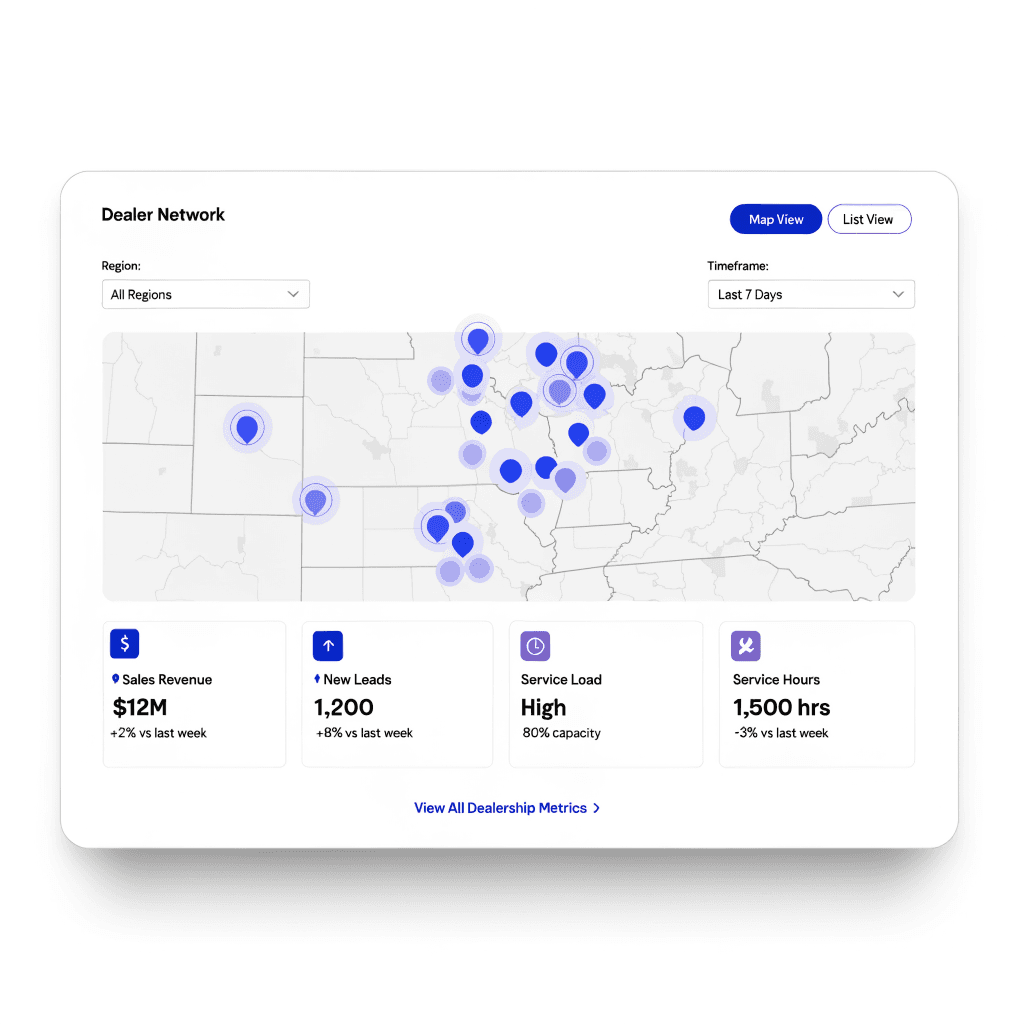
Automotive businesses run on three systems that were never built to talk to each other — the dealer CRM, the DMS, and the parts/service backend. We build the layer that connects them, and the forecasting AI that turns disconnected operations into one coordinated system.
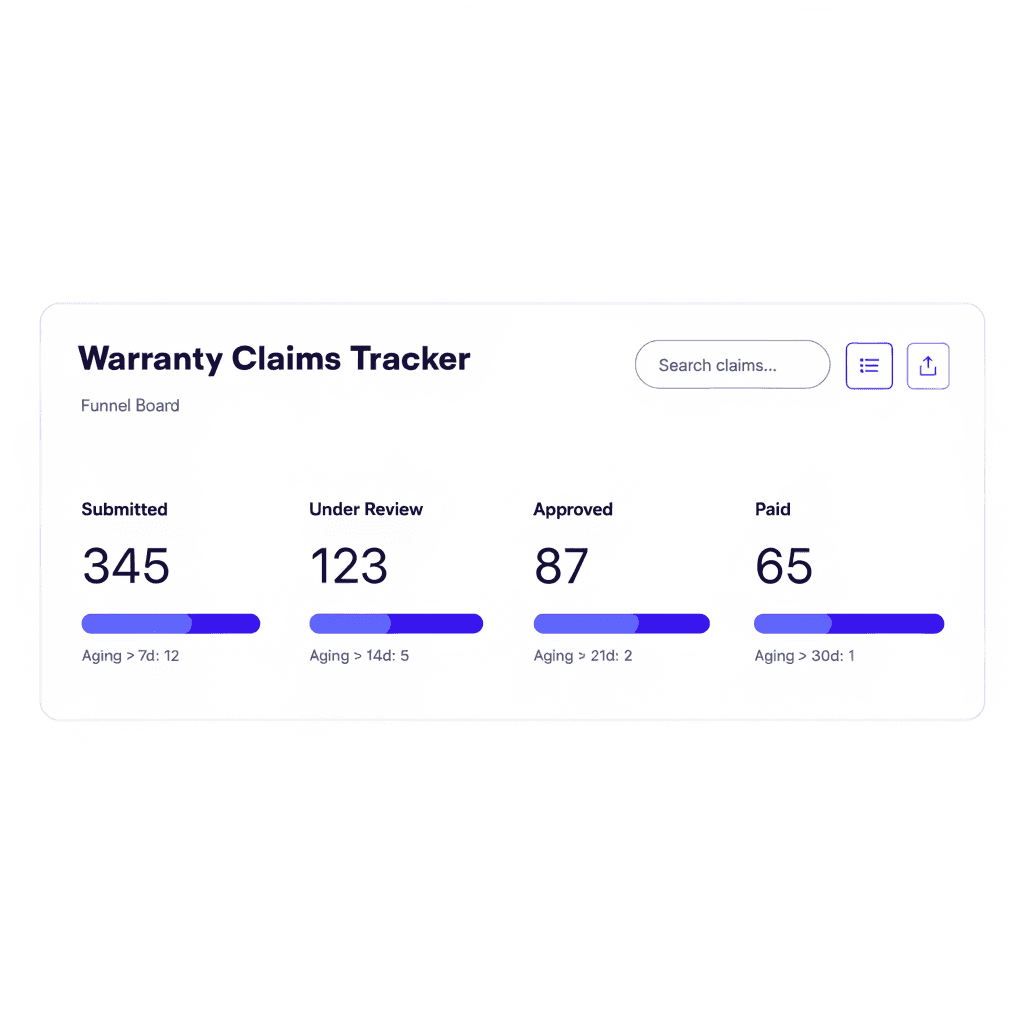
The challenge.
A lead goes cold because a sales rep never sees a service visit. A part gets reordered twice because inventory and demand data live in separate silos. Every disconnect costs a sale, a margin point, or a day of vehicle downtime — multiplied across an entire dealer network.
This isn't a data problem you fix with another dashboard. It needs systems that actually connect.
What you get.
- Unified dealer network visibility — CRM, DMS, and service data synced across every location
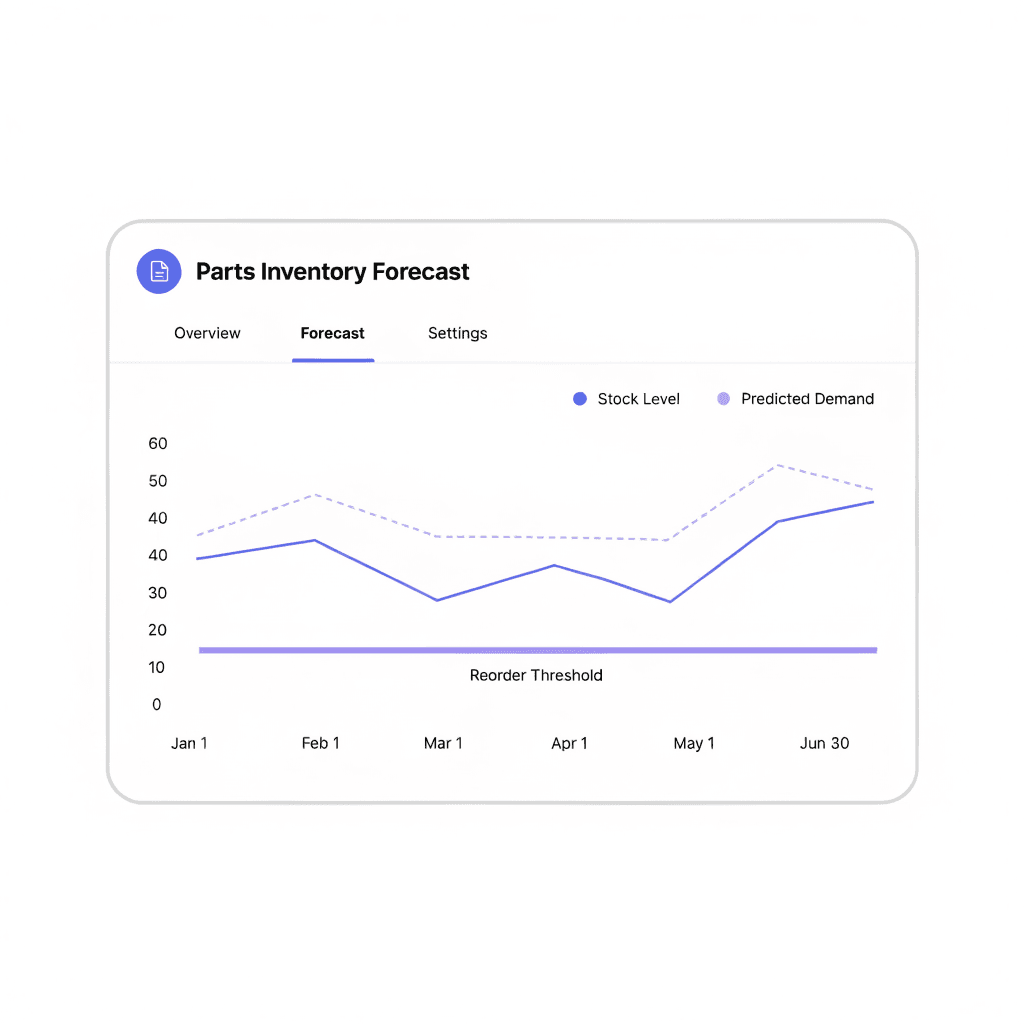
- AI-driven parts and demand forecasting — inventory and pricing that adjust to real sales velocity
- Predictive maintenance pipelines flagging failures before they take a vehicle or bay offline
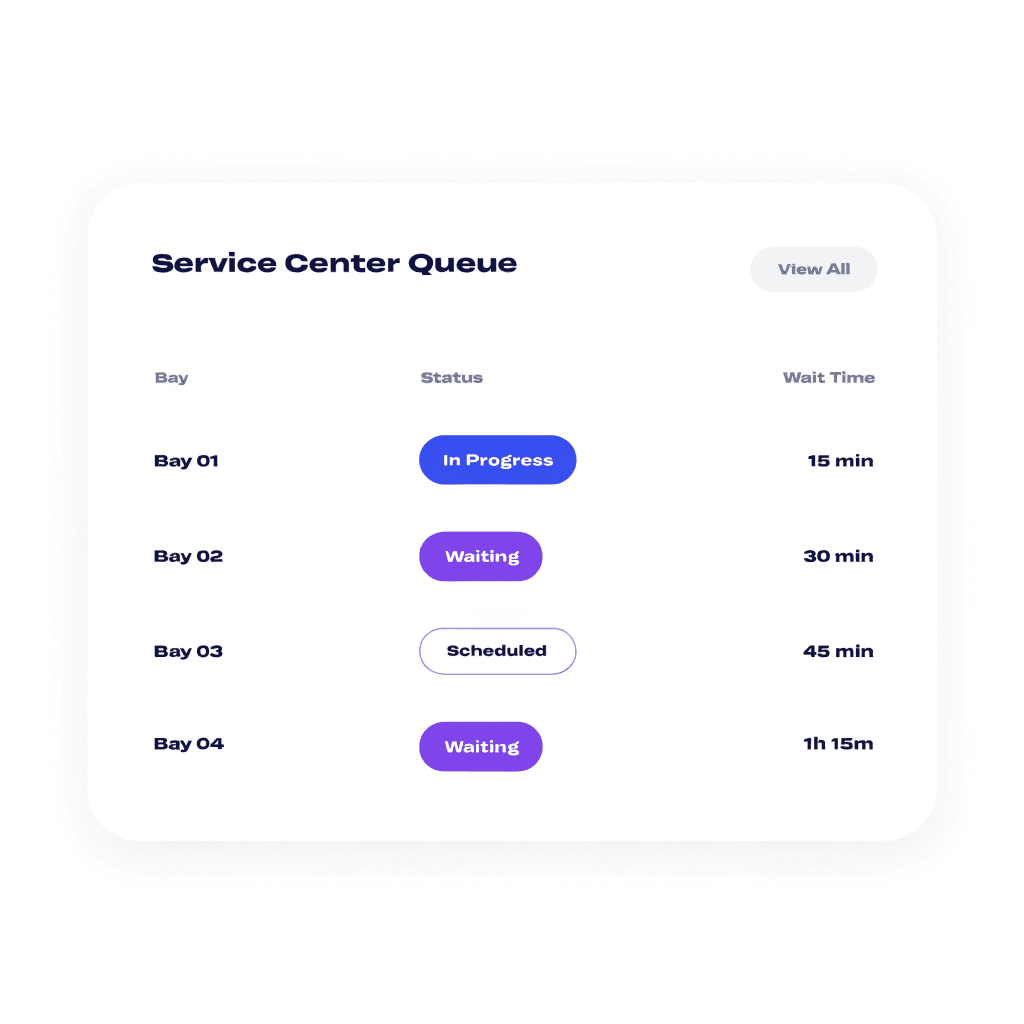
- Service-center workflow automation that eliminates manual re-entry and scheduling gaps
The problems that bring people to us.
The kind of problem that's usually already on your desk when you call us — and what's publicly documented about fixing it, cited so you can check it yourself.
Sales and service telling different stories about the same customer.
The problem
CRM, DMS, and financial systems at most dealer groups don't sync, so sales reps miss service history and service teams miss sales context — every handoff loses information.
The system
We build a unified data layer connecting CRM, DMS, and service platforms across every dealer location, with real-time sync and network-wide dashboards.
The result
56% of dealers report data gaps between their CRM, DMS, and financial systems more than a quarter of the time, according to an industry dealer-technology survey; closing those integration gaps could lift dealership efficiency by at least 20%.
Parts inventory that never matches real demand.
The problem
Parts inventory is managed on static reorder thresholds, driving both stockouts and overstock, while pricing stays flat even as demand and competitor pricing shift.
The system
We build an AI forecasting and dynamic-pricing engine tied to live sales and inventory data, adjusting stock levels and part pricing automatically.
The result
AI-based aftermarket pricing has been shown to lift margins by 2–6% of sales while staying within competitive guardrails.
Fleet maintenance that reacts instead of predicts.
The problem
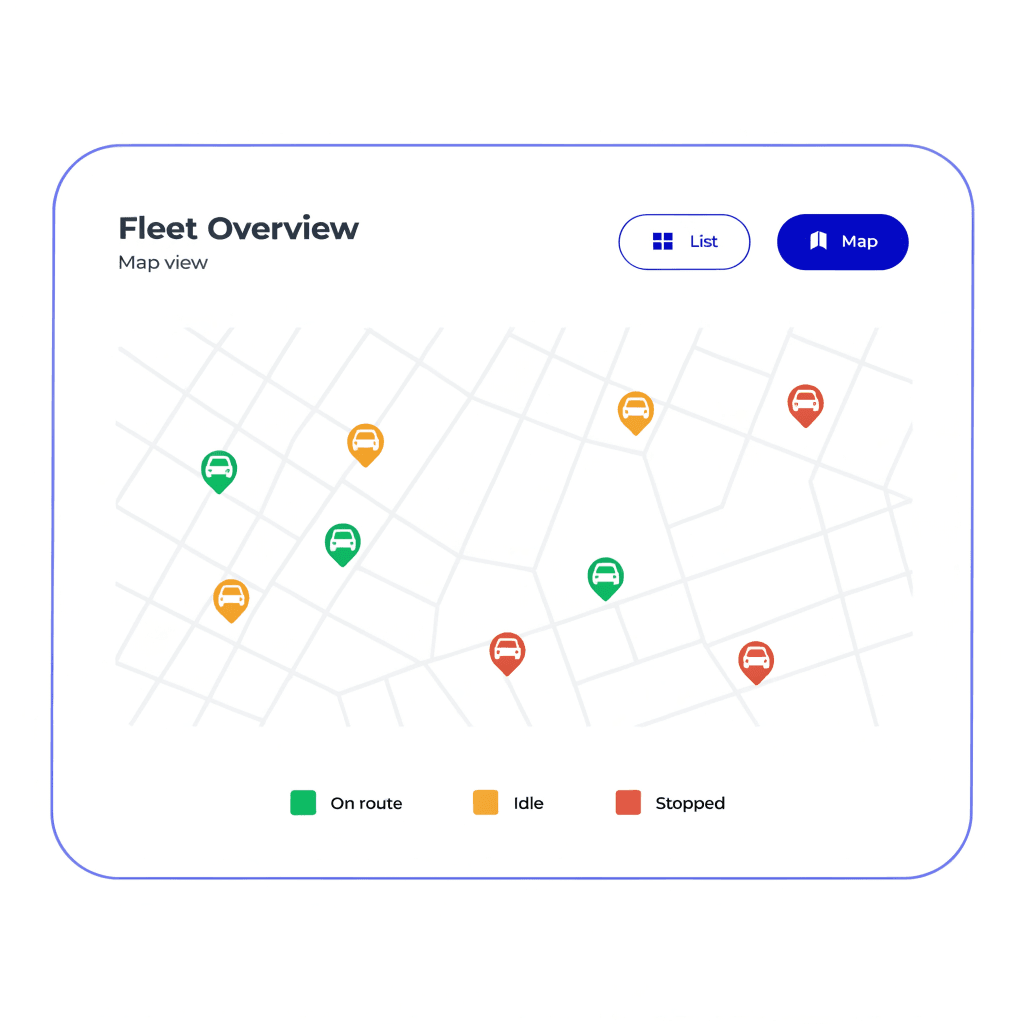
Reactive maintenance means vehicles fail unpredictably, disrupting fleet schedules and overwhelming service bays with unplanned work.
The system
We build a predictive maintenance pipeline ingesting telematics and sensor data to flag failures early, feeding directly into service-center scheduling so repairs are planned, not emergencies.
The result
A commercial delivery fleet running a predictive maintenance platform cut catastrophic engine failures by 80% and roadside breakdowns by 20%, saving $1M in the first 100 days.
Our approach.
Understand
Map your CRM, DMS and parts/service systems, and where handoffs lose information.
- CRM/DMS/parts systems audit
- Dealer network data baseline
- Aftersales and fleet data review
Architect
Design the integration layer connecting dealer, parts and service data.
- Unified dealer network data model
- Demand-forecasting model selection
- Predictive-maintenance pipeline design
Build
Deliver systems dealer, parts and service teams actually use across every location.
- Production deployment across the dealer network
- Forecasting and alerting built in
- Team training and handover
Related capabilities.
Why us.
Automotive operations live at the intersection of legacy dealer systems and modern AI — exactly where our AI & Enterprise Systems and Product & Software Engineering teams operate. We connect fragmented CRM/DMS/parts data, then layer forecasting and predictive models on top.
Common questions.
Do you replace our DMS or dealer CRM?
No. We build an integration layer connecting CRM, DMS and service platforms you already run — not a system that requires re-platforming your dealer network.
Product & Software EngineeringCan dynamic parts pricing work within our existing pricing guardrails?
Yes — the forecasting and pricing engine adjusts within the competitive and margin guardrails you set, not as an unconstrained black box.
AI & Enterprise SystemsHow long does a dealer network data integration typically take?
It depends on how many locations and systems are involved, but every engagement follows the same three-stage process — see the full breakdown with typical timeframes for each stage.
How we workDoes predictive maintenance require new telematics hardware?
Not necessarily — we work with the sensor and telematics data your fleet already generates before recommending anything new.
Talk to usRelated insights.
Let's build the connected system.
Start with a focused project discovery process.
Start a Project