Industries / Energy & Oil/Gas
Energy & Oil/Gas.
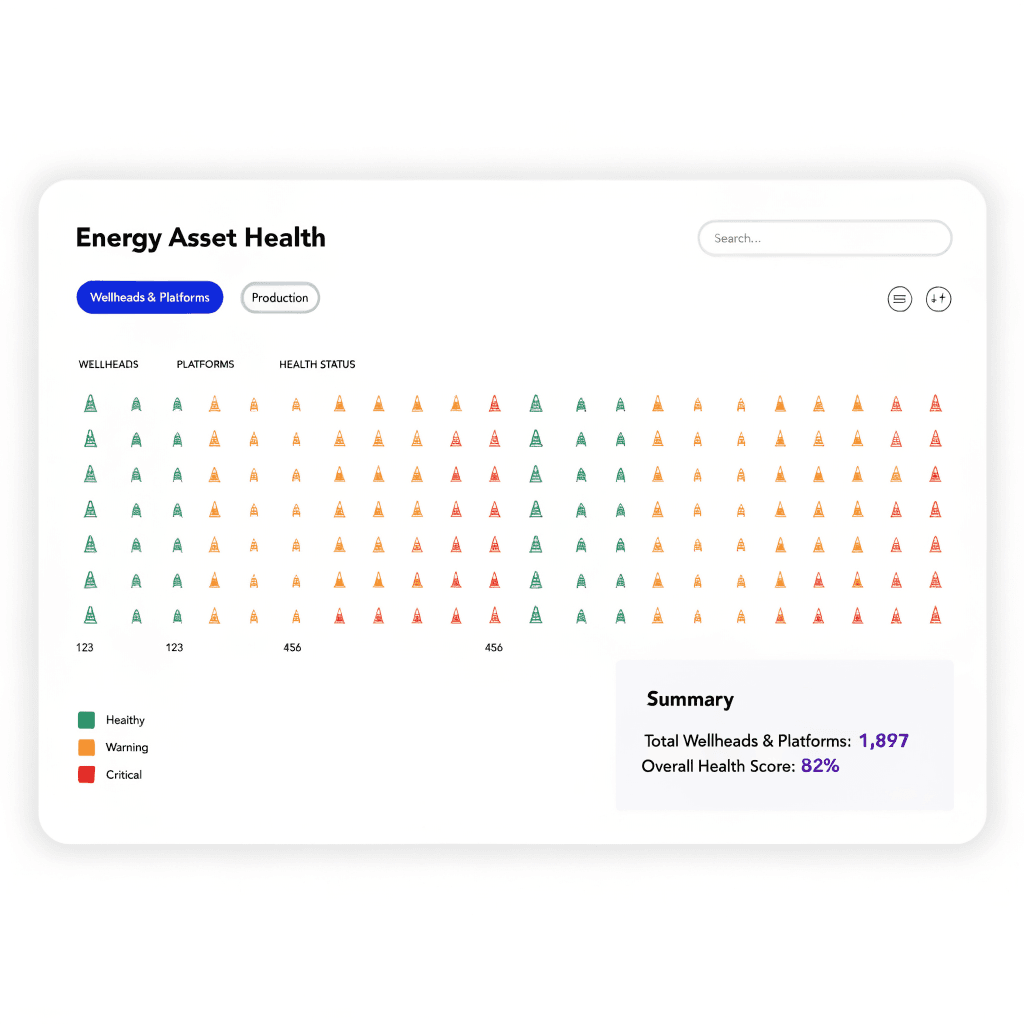
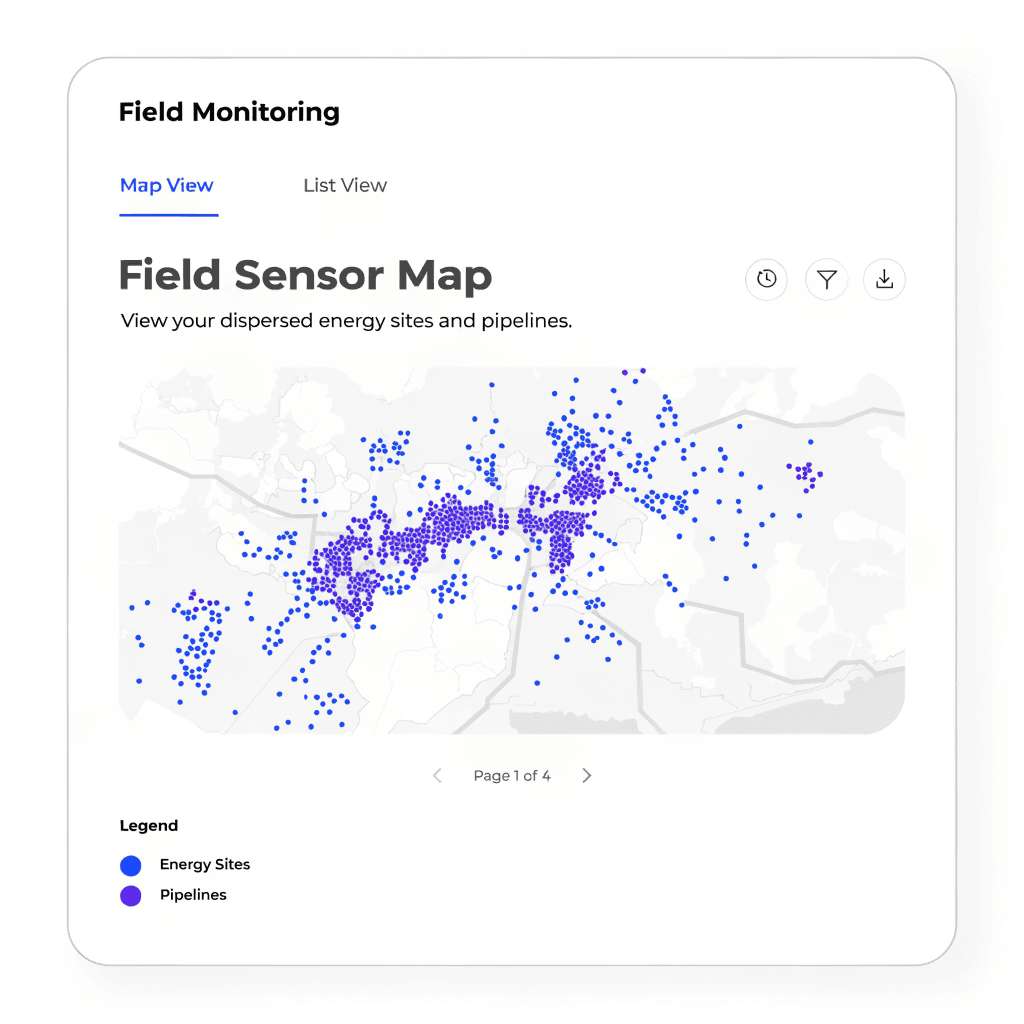
Energy operations run across dozens of dispersed sites — wellheads, substations, pipelines, offshore platforms — each generating sensor and SCADA data that rarely reaches anyone who could act on it. We connect that data to the AI layer that turns it into a decision before the incident report.
The challenge.
Equipment failures get discovered after output already drops, not before. Safety and compliance checks still depend on logbooks and manual spot audits, disconnected from the sensors that could flag a hazard in real time.
The fix isn't another monitoring tool. It's connecting legacy SCADA/OT systems to the IT and AI layer that turns raw signal into an operational decision.
What you get.
- Visibility into asset and equipment health across every site, without ripping out legacy SCADA
- Fewer failures — anomalies flagged and routed to a work order before they become downtime
- Compliance and safety data connected to the sensors that generate it, not tracked separately in a binder
- A technology stack we're transparent about, including exactly how it touches OT systems
The problems that bring people to us.
The kind of problem that's usually already on your desk when you call us — and what's publicly documented about fixing it, cited so you can check it yourself.
Equipment failures discovered after production already dropped.
The problem
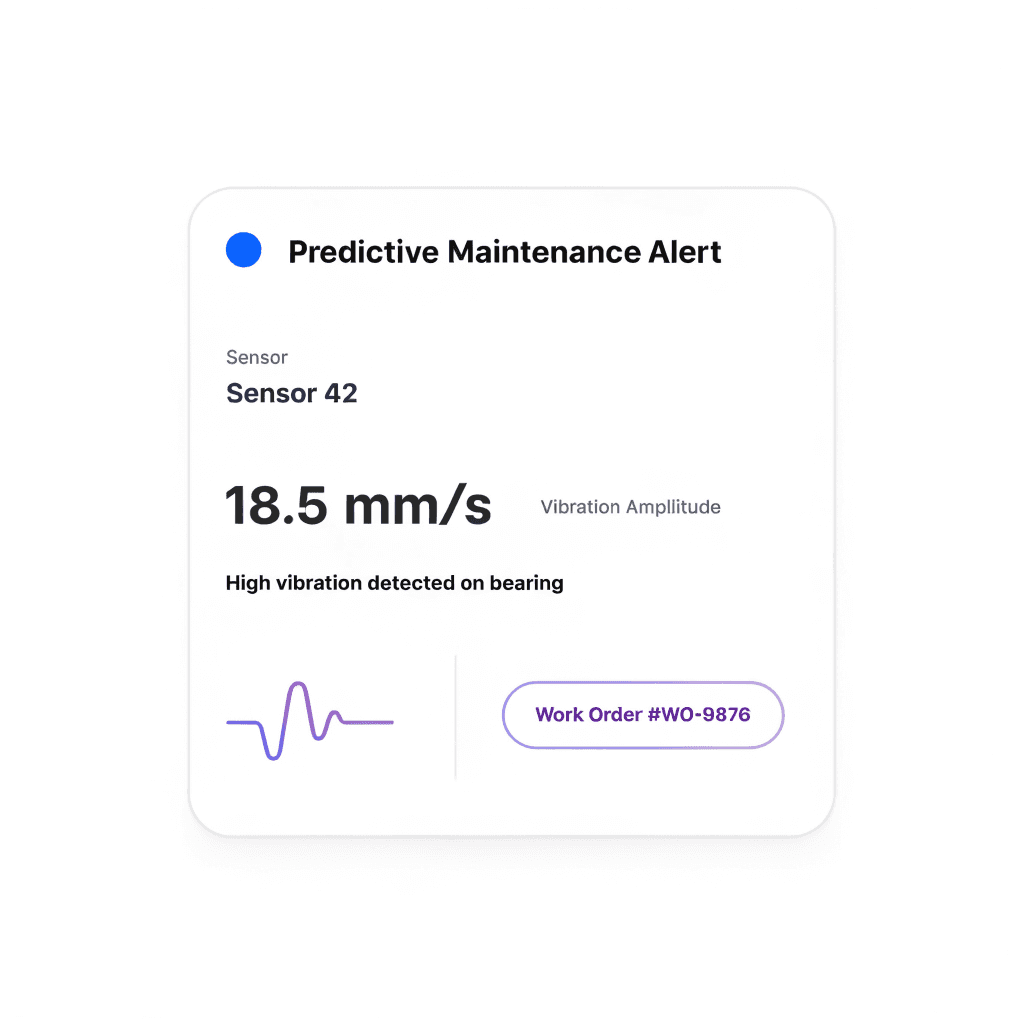
Across dispersed wellheads, platforms and refineries, vibration/temperature/pressure sensor data exists — but SCADA only triggers hard-limit alarms. By the time one fires, output is already lost.
The system
We connect OT sensor data to an integrated data layer and predictive-maintenance AI that flags drift before it crosses the alarm threshold, routing the alert into a maintenance work order instead of a light on a panel.
The result
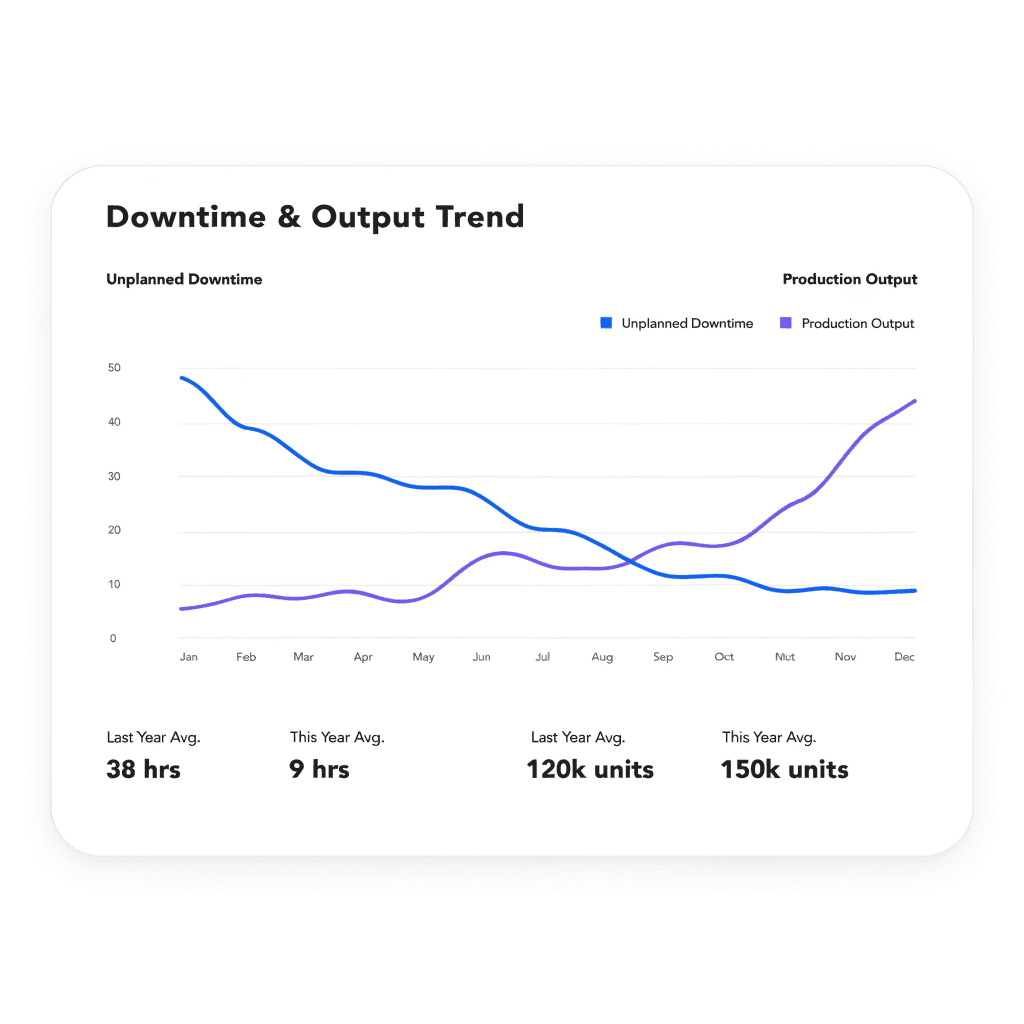
Predictive maintenance programs typically cut unplanned downtime 30–50% and extend equipment life 20–40%, and the average offshore platform runs at only 77% of its production potential — an industry-wide gap of roughly 10 million barrels/day, or $200B in annual revenue.
Safety incidents caught by the incident report, not the sensor.
The problem
PPE compliance and hazard monitoring on hazardous operations still relies on manual spot checks — by the time a violation is logged, the exposure already happened.
The system
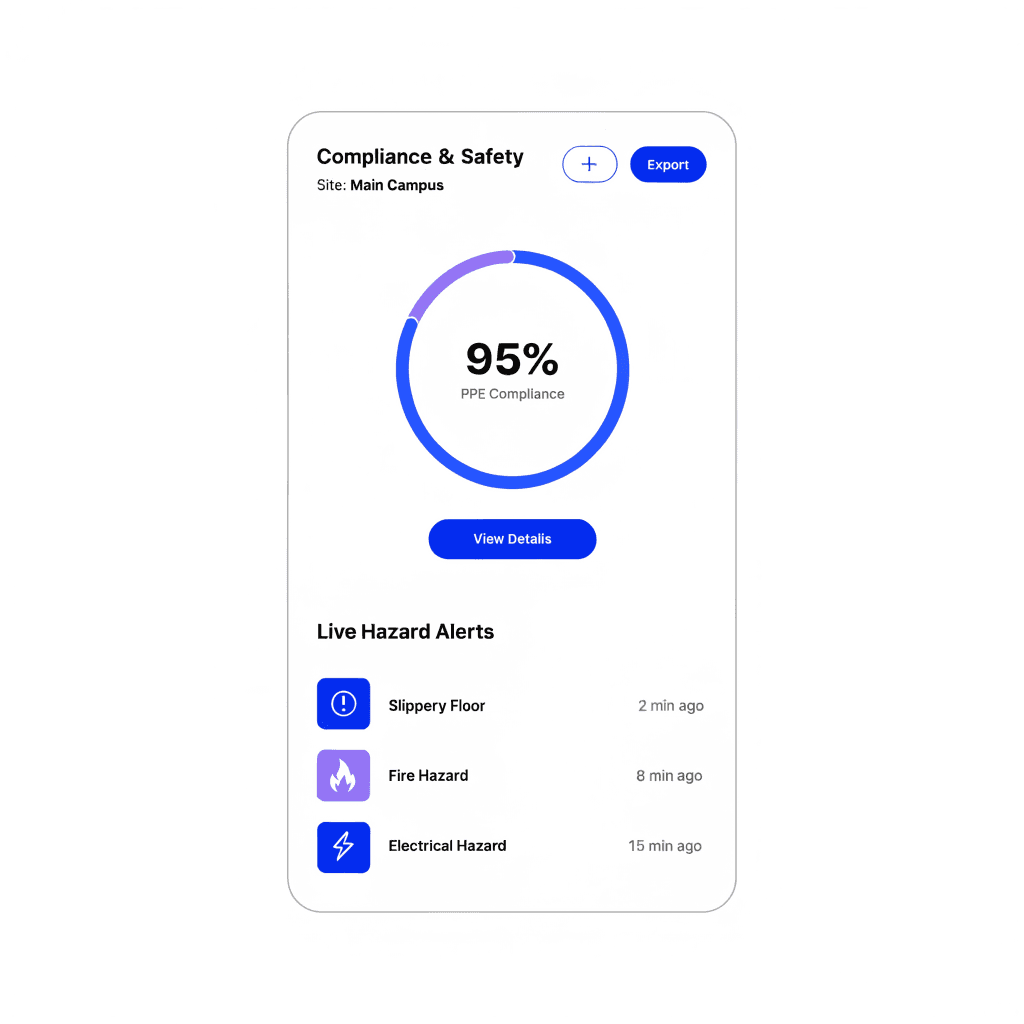
We build a computer-vision and AI safety-monitoring layer on top of existing camera/sensor infrastructure, feeding a live compliance dashboard with automated alerts instead of a quarterly audit.
The result
An AI monitoring deployment on hazardous loading operations at a major energy company cut workplace incidents by 75% within 16 weeks, reaching 95% PPE compliance within six months.
Output forecasts too imprecise to commit to the grid.
The problem
Forecasts built on historical averages miss the weather- and demand-driven swings that determine whether energy sold counts as "scheduled" — and priced accordingly — versus unpredictable.
The system
We build AI forecasting models trained on historical consumption, weather and real-time operating data, producing output predictions far enough ahead to commit to the grid.
The result
This exact approach, applied to 700MW of wind capacity, forecast output 36 hours ahead — increasing the value of that wind energy by roughly 20% by making it schedulable.
Our approach.
Understand
Map your SCADA, OT and sensor systems, and where signal gets lost before it reaches a decision.
- SCADA/OT systems audit
- Sensor and safety data baseline
- Compliance documentation review
Architect
Design the OT-to-IT integration layer that turns raw signal into a work order.
- OT/IT data integration design
- Predictive-maintenance model selection
- Safety monitoring architecture
Build
Deliver a system field and safety teams actually use, on top of existing infrastructure.
- Production deployment across sites
- Alerting and work-order routing built in
- Field team training and handover
Related capabilities.
Why us.
Energy operations don't get a second chance on a missed safety signal or an unplanned shutdown. We bring 20+ years of enterprise systems experience — including energy-sector engagements — to building the AI & Enterprise Systems and Product & Software Engineering layer that sits on top of your existing SCADA/OT infrastructure, not around it.
Common questions.
Do you replace our SCADA system?
No. We connect OT sensor data to an integrated data and AI layer on top of your existing SCADA — not around it, and not instead of it.
AI & Enterprise SystemsHow do you handle the security boundary between OT and IT systems?
We're direct about exactly how any integration touches OT infrastructure — a technology stack we're transparent about, not a black box connecting into safety-critical systems.
Product & Software EngineeringHow long does a predictive-maintenance rollout typically take?
It depends on the number of sites and sensor types involved, but every engagement follows the same three-stage process — see the full breakdown with typical timeframes for each stage.
How we workCan this work across multiple dispersed sites at once?
Yes — the same integration layer scales across wellheads, platforms and refineries; the architecture is designed for dispersed sites from the start, not retrofitted for one.
Talk to usRelated insights.
Let's build the connected system.
Start with a focused project discovery process.
Start a Project