Industries / Real Estate & Construction
Real Estate & Construction.
Real estate and construction run on two disconnected worlds — the site and the office. We build the data layer connecting them, so a building's own history doesn't get lost the moment the ribbon is cut.
The challenge.
Daily progress lives in paper logs, photos and spreadsheets from a dozen subcontractors, while the office sees it days later, if at all. Leasing, property management and asset operations sit in separate systems that rarely talk to the construction data underneath them.
The fix isn't another dashboard. It's one data layer connecting site to office to portfolio.
What you get.
- Live visibility from job site to head office, without ripping out the tools crews already use
- Fewer disputes and change-order surprises — progress and cost tracked against the actual build
- Leasing, property management and facilities data connected to the same system that manages construction
- A technology stack we're transparent about, end to end
The problems that bring people to us.
The kind of problem that's usually already on your desk when you call us — and what's publicly documented about fixing it, cited so you can check it yourself.
Progress tracked by memory, not by data.
The problem
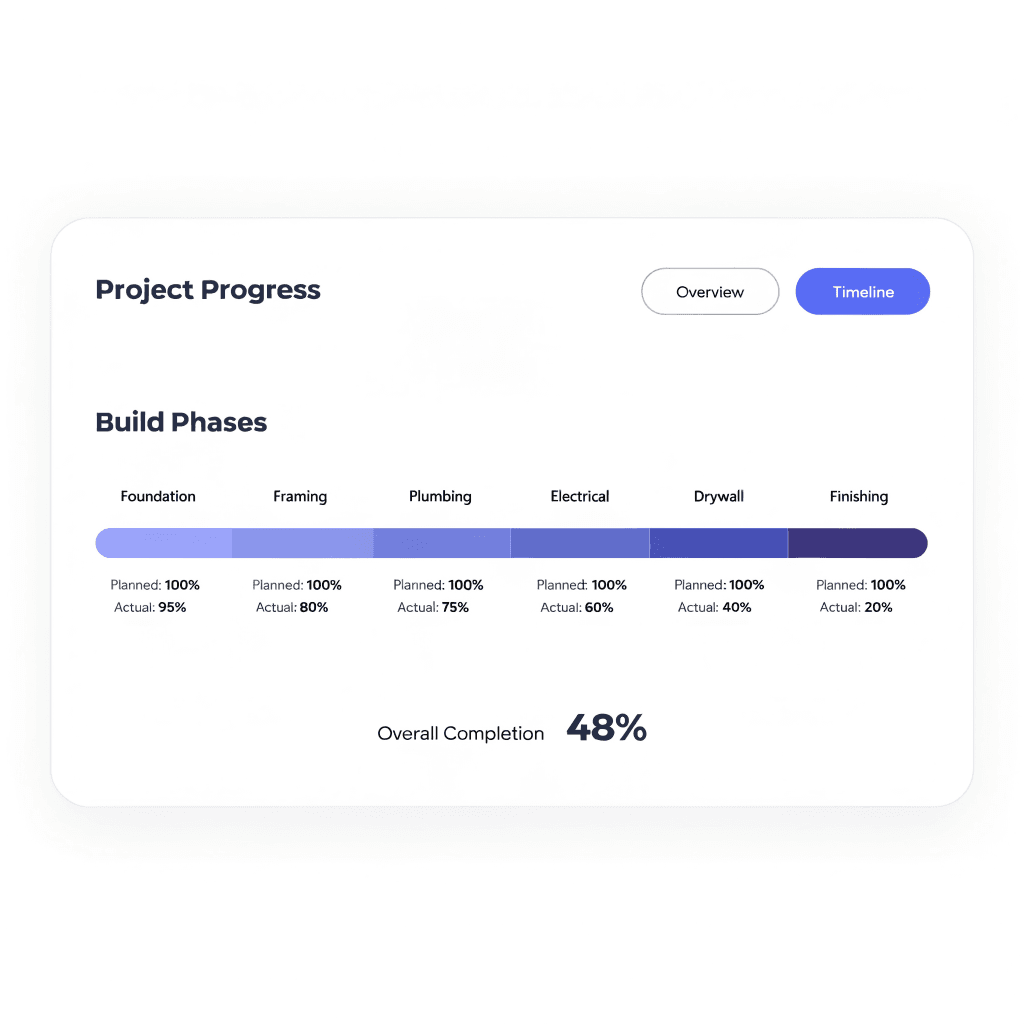
Construction progress gets reported the way it's always been — a superintendent's daily log, a folder of site photos, a percentage someone estimates in a meeting. By the time a delay shows up in the schedule, it's already cost weeks.
The system
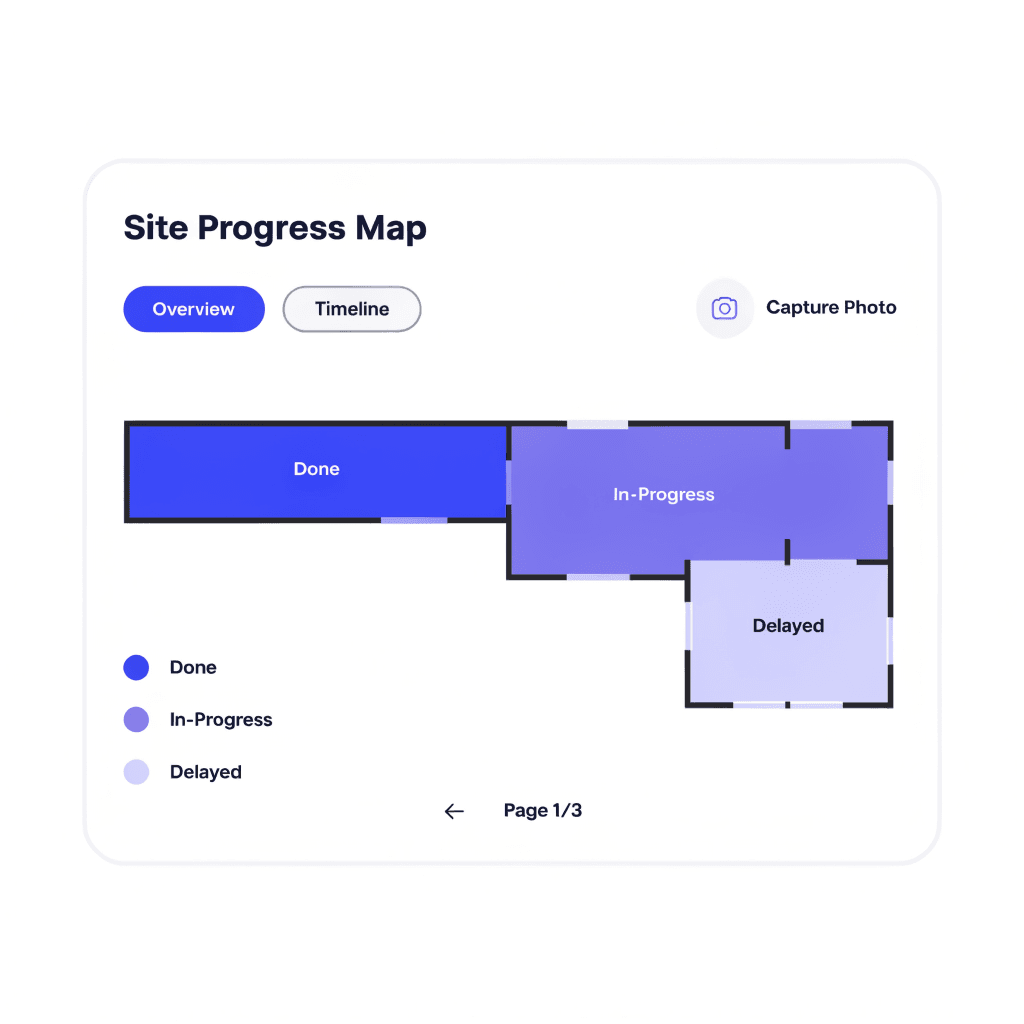
We connect site capture (photos, drone/BIM data, daily logs) to a progress-tracking layer that compares actual build state against plan automatically, flagging drift before it becomes a missed milestone.
The result
A major contractor documented exactly this mechanism on a 45-story office tower — a ~$3.8M investment in connected digital-twin/site data (about 0.8% of project cost) returned $11.2M in documented cost avoidance and schedule improvements.
Leases nobody re-reads after signing.
The problem
Leasing and property teams manage hundreds of contracts as static PDFs. Escalation clauses, renewal windows and obligations get missed simply because no one is re-reading a thousand-page lease library every month.
The system
We build AI-assisted lease abstraction and CRM automation that extracts obligations, dates and clauses from lease documents and routes them to whoever owns that deal — not buried in a shared drive.
The result
A global commercial real estate firm's rollout of AI lease abstraction cut manual review labor by roughly 60% in its first year, let the same team handle about 3x the volume, and surfaced over $1 million in previously missed escalation clauses.
Maintenance reacting instead of predicting.
The problem
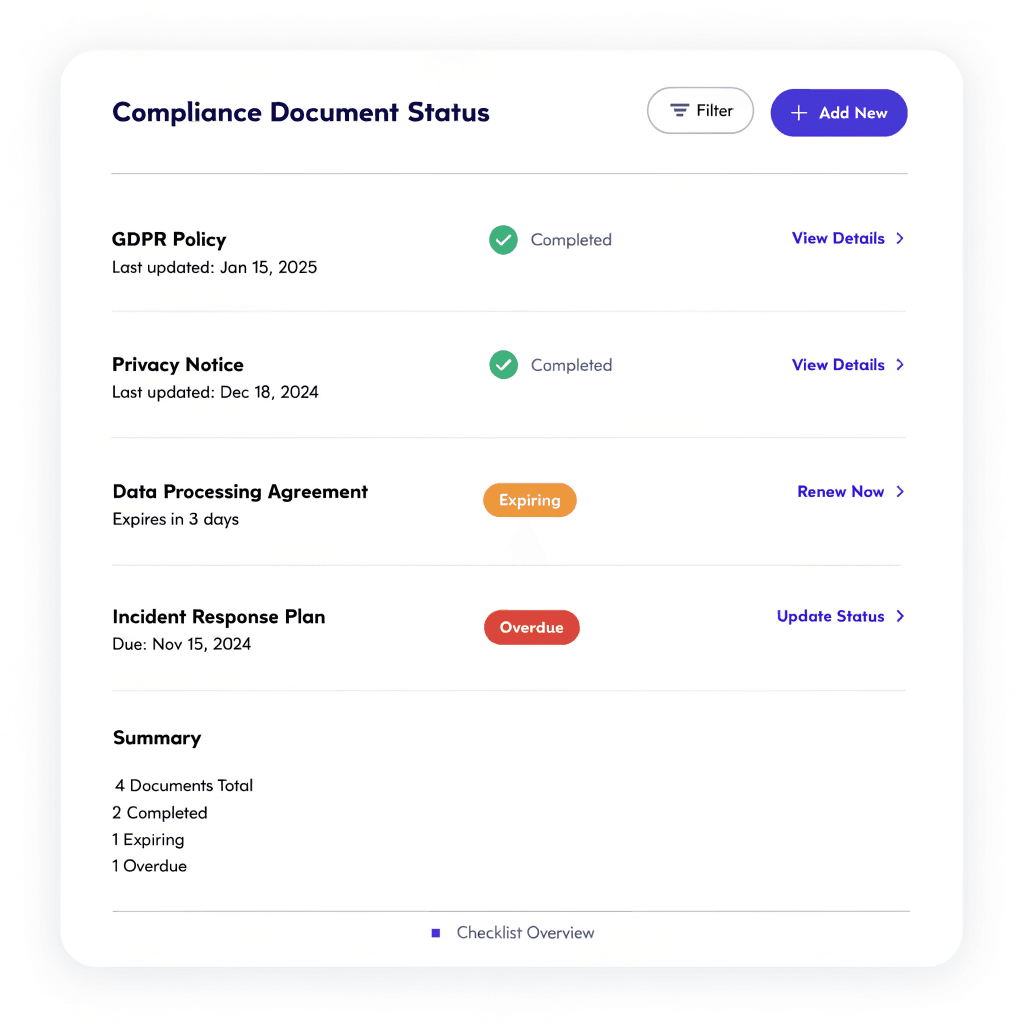
Facilities teams run on fixed maintenance schedules and paper compliance checklists, so equipment fails between checks and safety/ESG documentation lags what regulators and tenants actually ask for.
The system
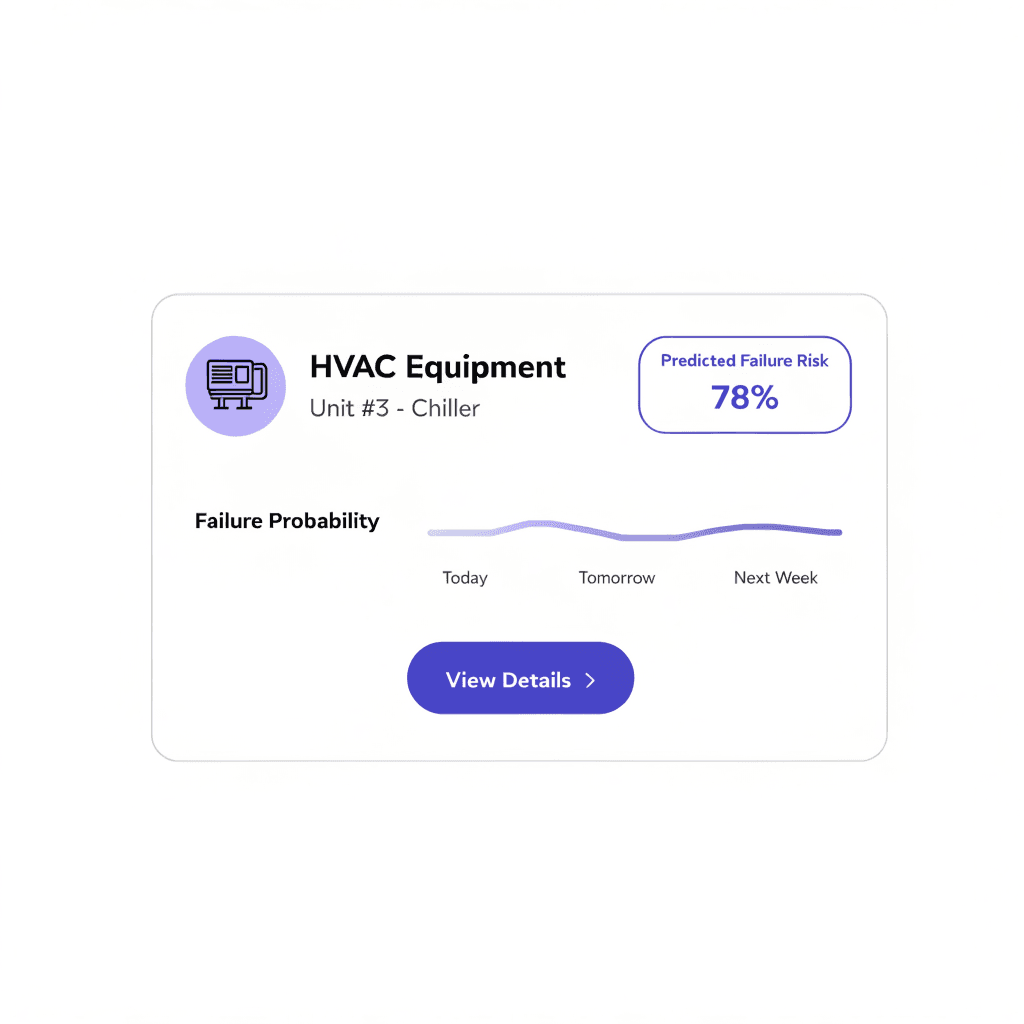
We connect building sensor and equipment data to a predictive-maintenance layer, paired with a compliance-documentation system that keeps permits, inspections and ESG records current and auditable.
The result
Predictive maintenance research shows programs like this typically cut maintenance costs by 18–25% and reduce unplanned downtime by up to 50% — the same mechanism applied to building systems, not just factory machines.
Our approach.
Understand
Map your site, leasing and facilities systems, and where site-to-office visibility breaks down.
- Site and contractor data audit
- Leasing and property systems inventory
- Compliance documentation review
Architect
Design the data layer connecting site progress to leasing and portfolio operations.
- Site-to-office data model
- Lease abstraction and CRM automation design
- Predictive-maintenance model selection
Build
Deliver a system project and facilities teams actually use, not another spreadsheet.
- Production deployment across sites and portfolio
- Progress and compliance alerting built in
- Team training and handover
Related capabilities.
Why us.
Real estate and construction data problems are enterprise-systems problems — dozens of contractors, systems and data owners that need one coherent layer, not another app. We bring 20+ years of enterprise integration experience and the same transparency about our tech stack we bring to every industry.
Common questions.
Do you replace our existing property management or leasing software?
No. We connect site, leasing and facilities systems you already run into one data layer — you keep the tools your teams know.
Product & Software EngineeringHow does AI lease abstraction handle non-standard lease language?
It extracts obligations and clauses for a person to confirm, not to auto-approve — the same first-pass-then-verify pattern we use anywhere AI output has to be trusted.
AI & Enterprise SystemsHow long does a site-to-office integration typically take?
It depends on how many sites and systems are involved, but every engagement follows the same three-stage process — see the full breakdown with typical timeframes for each stage.
How we workCan this connect construction data to property operations after handover?
Yes — the same data layer carries build history into facilities and asset operations, so a building's own history isn't lost when the ribbon is cut.
Talk to usRelated insights.
Let's build the connected system.
Start with a focused project discovery process.
Start a Project