Industries / Telecommunications
Telecommunications.
Operators run on decades of accumulated infrastructure — OSS and BSS platforms bolted together through mergers and vendor swaps, each speaking a different data model. We build the integration layer that connects them, and the AI that turns that data into fewer support calls and less churn.
The challenge.
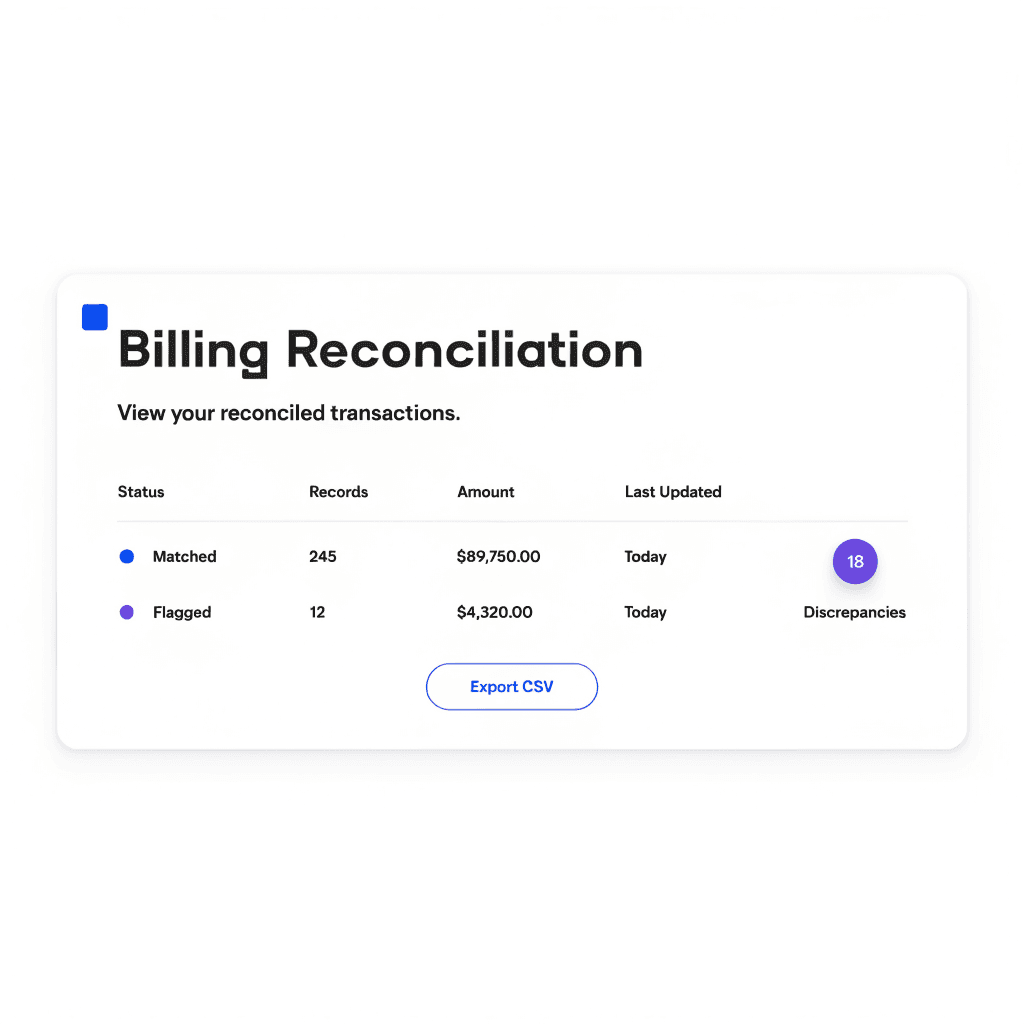
Network performance data, billing records and customer interaction history sit in separate systems that were never built to talk to each other — so a customer calling about a billing error can't be matched to the network issue that caused it. That fragmentation shows up directly in churn and cost.
The operators pulling ahead aren't rebuilding OSS/BSS from zero. They're layering AI and integration systems on top of what already runs the network.
What you get.
- A unified view of billing, network and support data — not another siloed dashboard
- Predictive churn scoring built into retention's existing workflow, not a report nobody opens
- AI customer service copilots trained on your actual billing logic and troubleshooting flows
- An integration layer on open API standards, so launching a new service isn't another custom project
The problems that bring people to us.
The kind of problem that's usually already on your desk when you call us — and what's publicly documented about fixing it, cited so you can check it yourself.
Churn discovered at the cancellation request.
The problem
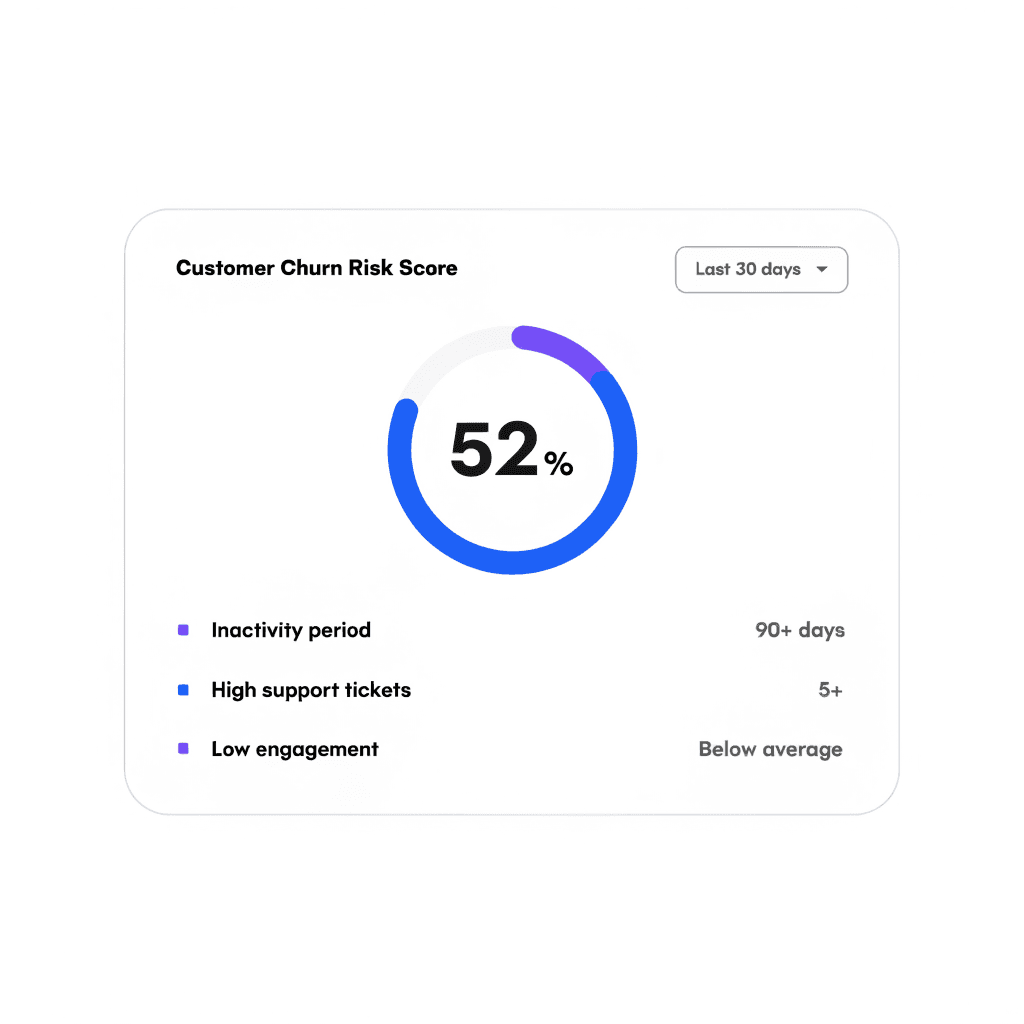
Retention teams find out about churn risk when the cancellation request arrives — by then, the customer and their contract value are already gone.
The system
We build a predictive churn model trained on usage, billing, network quality and support-interaction data, feeding real-time risk scores directly into the retention team's outreach workflow — before the cancellation, not after.
The result
A comprehensive, analytics-driven approach to base management can reduce telecom churn by as much as 15%, according to industry research.
Support agents rebuilding context on every call.
The problem
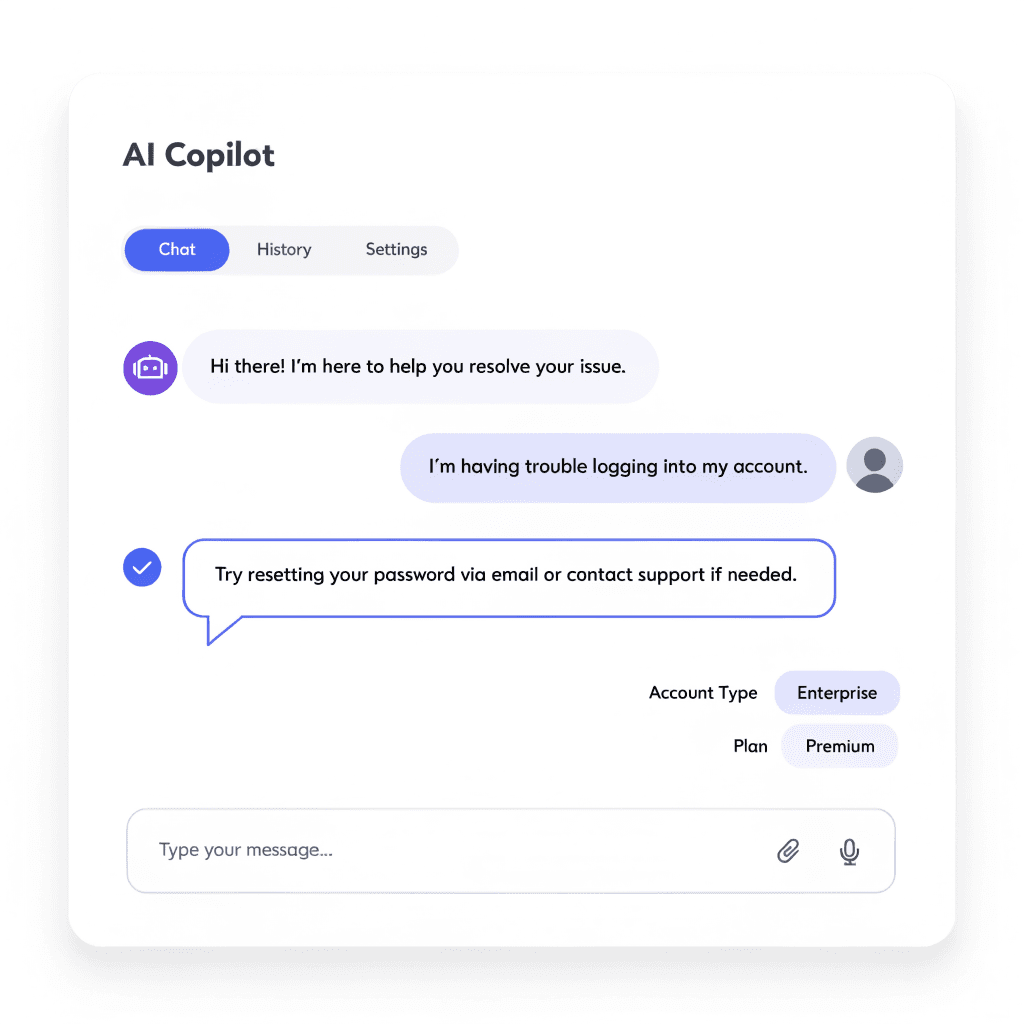
Agents burn minutes per call piecing together billing history, plan details and network status from disconnected systems, while customers repeat themselves across channels.
The system
We build a customer service copilot layered over existing CRM and OSS/BSS systems, surfacing account, billing and network context in one place and resolving routine queries autonomously.
The result
A major European telecom operator's GenAI customer service agent now resolves more than 70% of conversations end-to-end and lifted NPS by 8 percentage points versus its previous AI agent, across its markets.
Network optimization that reacts after customers notice.
The problem
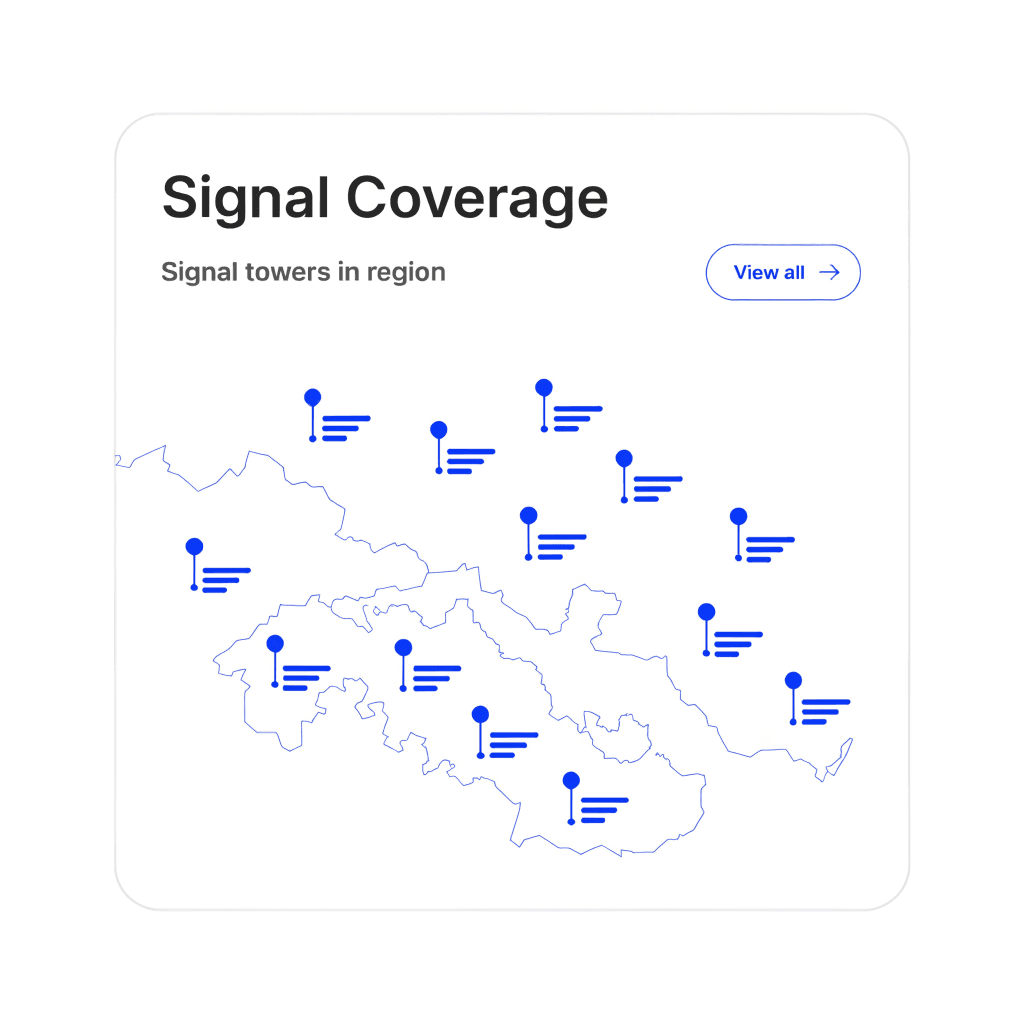
Manual network optimization can't keep pace with capacity demand — engineers tune parameters reactively, often after service has already degraded.
The system
We build an AI-based network automation layer that continuously analyzes performance data and executes corrective actions — load balancing, parameter tuning — without waiting on a human-triggered ticket.
The result
An AI-based network automation deployment at a major operator took 42% more corrective actions than non-AI systems, improving streaming performance by 16% while cutting CapEx by 2.4%.
Our approach.
Understand
Map your OSS/BSS, CRM and network data, and where customer context breaks down.
- OSS/BSS and CRM systems audit
- Billing and network data baseline
- Churn and support-cost analysis
Architect
Design the integration layer that connects billing, network and customer data.
- Unified customer data model
- Churn-prediction model selection
- OSS/BSS integration design
Build
Deliver systems retention and support teams actually use, on open API standards.
- Production deployment across systems
- Copilot and alerting built in
- Team training and handover
Related capabilities.
Why us.
Telecom problems are systems problems — a churn model is only as good as the billing and network data feeding it, and a copilot is only as good as the systems it's plugged into. Our AI & Enterprise Systems team builds the models; our Product & Software Engineering team builds the integration layer that connects real OSS/BSS and CRM data.
Common questions.
Does a churn model actually work without clean, unified data first?
No — and that's the part most churn projects skip. We build the integration layer connecting billing, network and support data before the model, not after, so the score reflects real signal.
AI & Enterprise SystemsDo you replace our OSS/BSS platform?
No. We build an integration layer on top of what you already run — OSS, BSS, CRM — rather than asking you to migrate off systems your network already depends on.
Product & Software EngineeringHow long does an OSS/BSS integration project usually take?
It depends on how many systems are involved, but every engagement follows the same three-stage process — see the full breakdown with typical timeframes for each stage.
How we workCan a customer service copilot work with our existing CRM?
Yes — the copilot is built to surface context from the systems you already run, not to replace your CRM. Integration design accounts for your specific stack from the start.
Talk to usRelated insights.
Let's build the connected system.
Start with a focused project discovery process.
Start a Project