Industries / Manufacturing
Manufacturing.
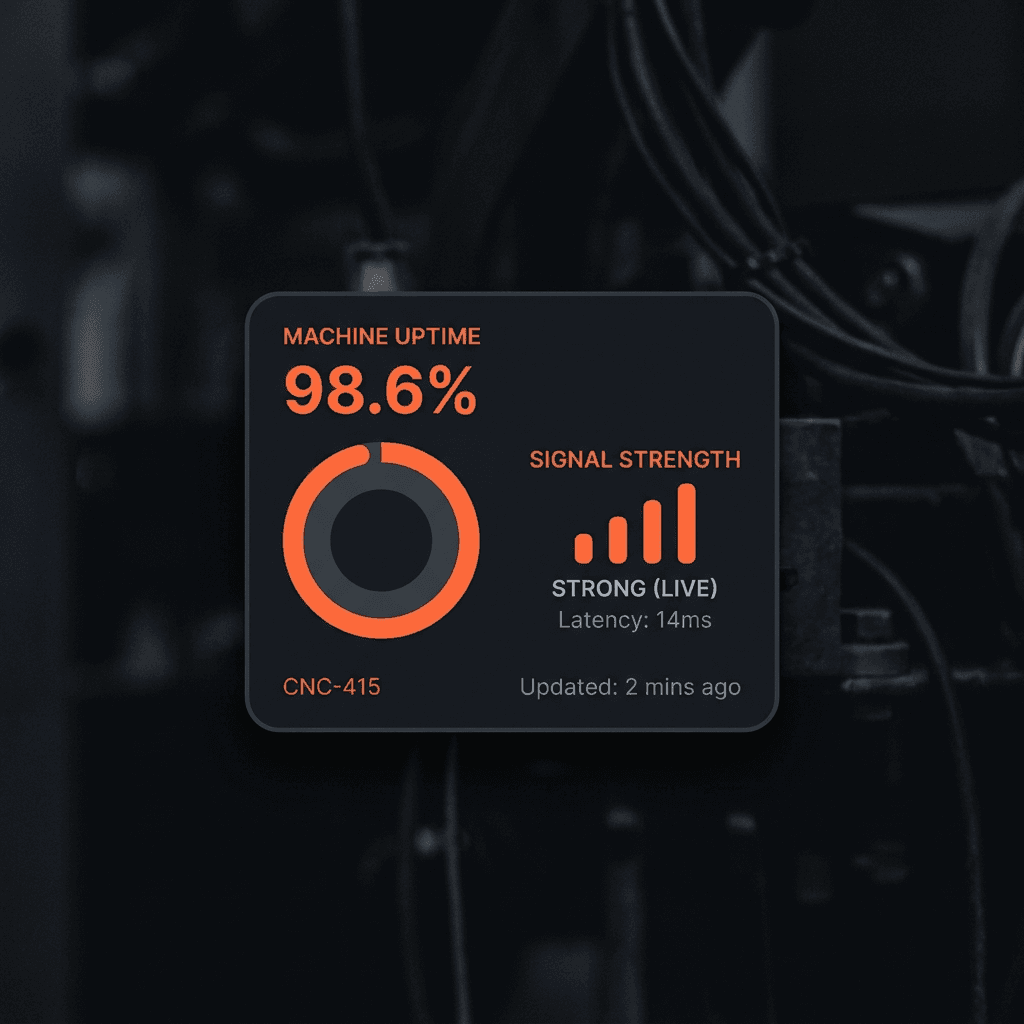
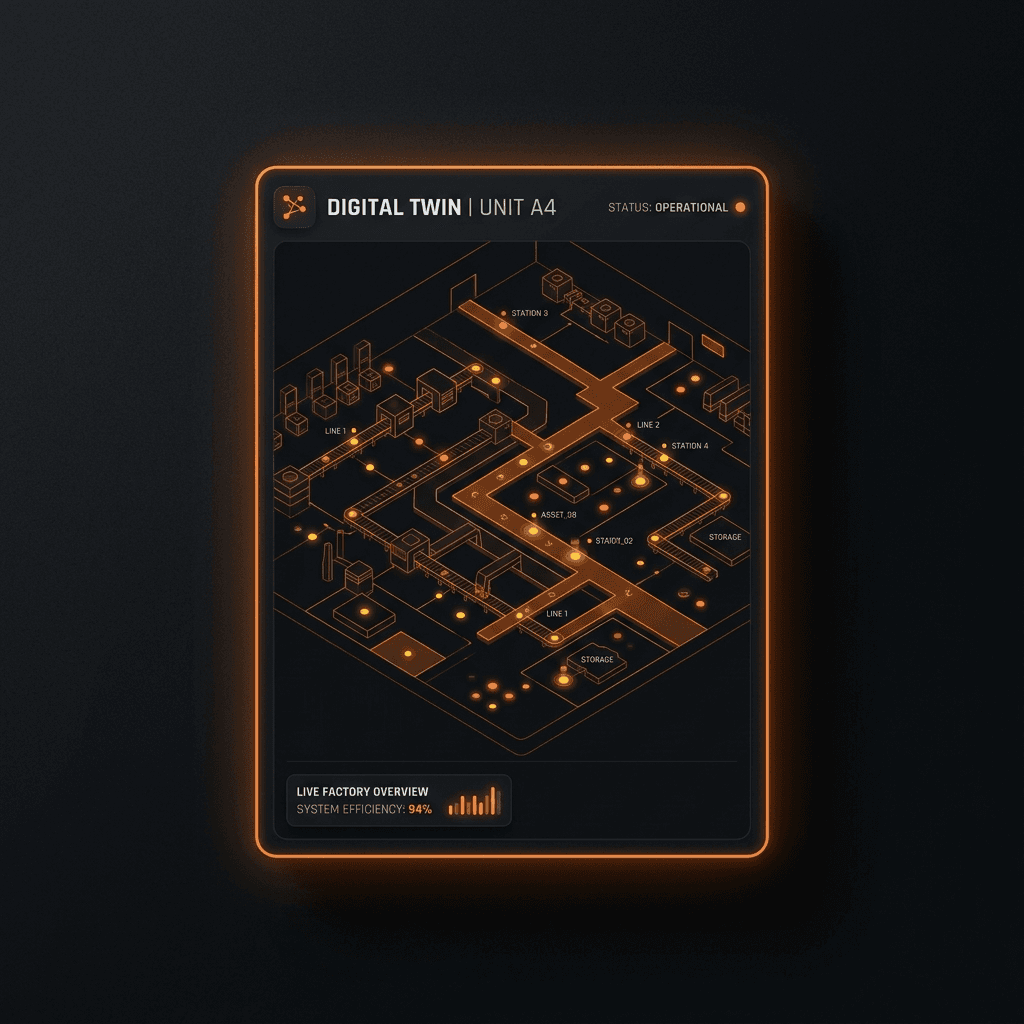
Factories generate more data than any system is using. We turn machine and IoT data into a live digital twin of your operations — and the ERP, analytics and AI layer that makes it actionable.
The challenge.
Most manufacturing data lives in silos — machine logs no one reads, ERP systems that don't talk to the shop floor, IoT sensors reporting numbers without context. Downtime and inefficiency get discovered after the fact, not prevented.
The fix isn't more dashboards. It's connecting the systems that already exist into one operating picture.
What you get.
- Visibility into machine and shop-floor data without buying new hardware
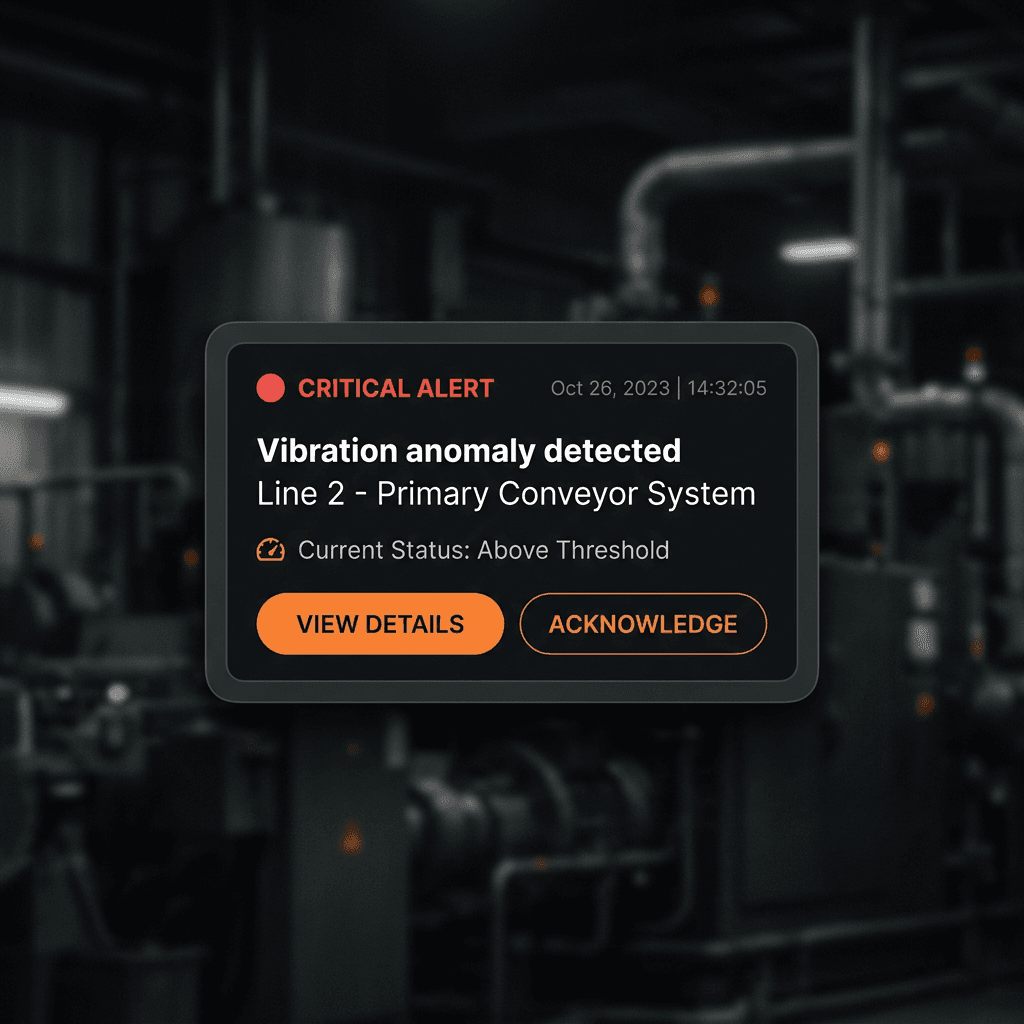
- Fewer surprises — anomalies flagged before they become downtime
- An ERP and analytics layer that connects to what you already run
- A technology stack we're transparent about, end to end
The problems that bring people to us.
One of these we've delivered. The other two are the pattern we see most — the kind of problem that's usually already on your desk when you call us.
Maintenance and purchasing, finally in one place.
The problem
Factory teams tracked equipment, maintenance work and supplier purchases across spreadsheets and paper — no shared history, no real-time view from the shop floor to management.
The system
We built a maintenance and procurement platform covering every location's assets and equipment, real-time task tracking from technician to manager, supplier purchase history, warehouse stock, and department-level spend reporting — all in one system.
The result
Continuous production uptime and a longer equipment lifespan, with every purchase and repair now part of the company's institutional memory instead of someone's inbox.
Downtime discovered after the fact, not before.
The problem
Sensor data exists — vibration, temperature, cycle time — but only triggers hard-limit alarms. By the time anyone notices, the line has already stopped.
The system
We connect sensor data to an anomaly-detection layer that flags drift before it crosses the alarm threshold, and routes the alert straight into a maintenance work order — not just a light on a panel.
The result
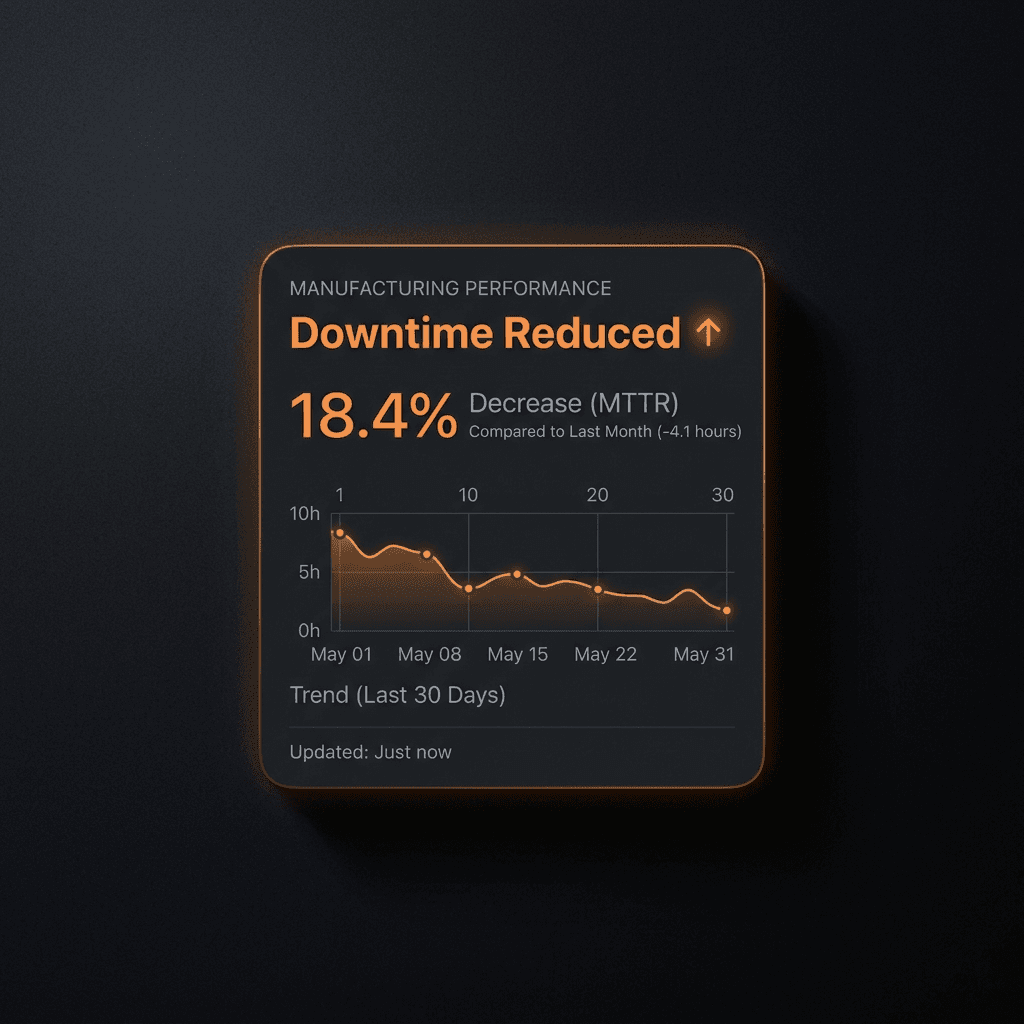
Predictive maintenance programs like this typically cut unplanned downtime by 30–50% and extend machine life by 20–40%, according to advanced manufacturing analytics research — an industry benchmark, not a promise, but a realistic target range.
ERP and the shop floor telling two different stories.
The problem
Inventory in the ERP is only as current as the last manual count — often a full shift behind what's actually on the floor, causing both stockouts and excess safety stock.
The system
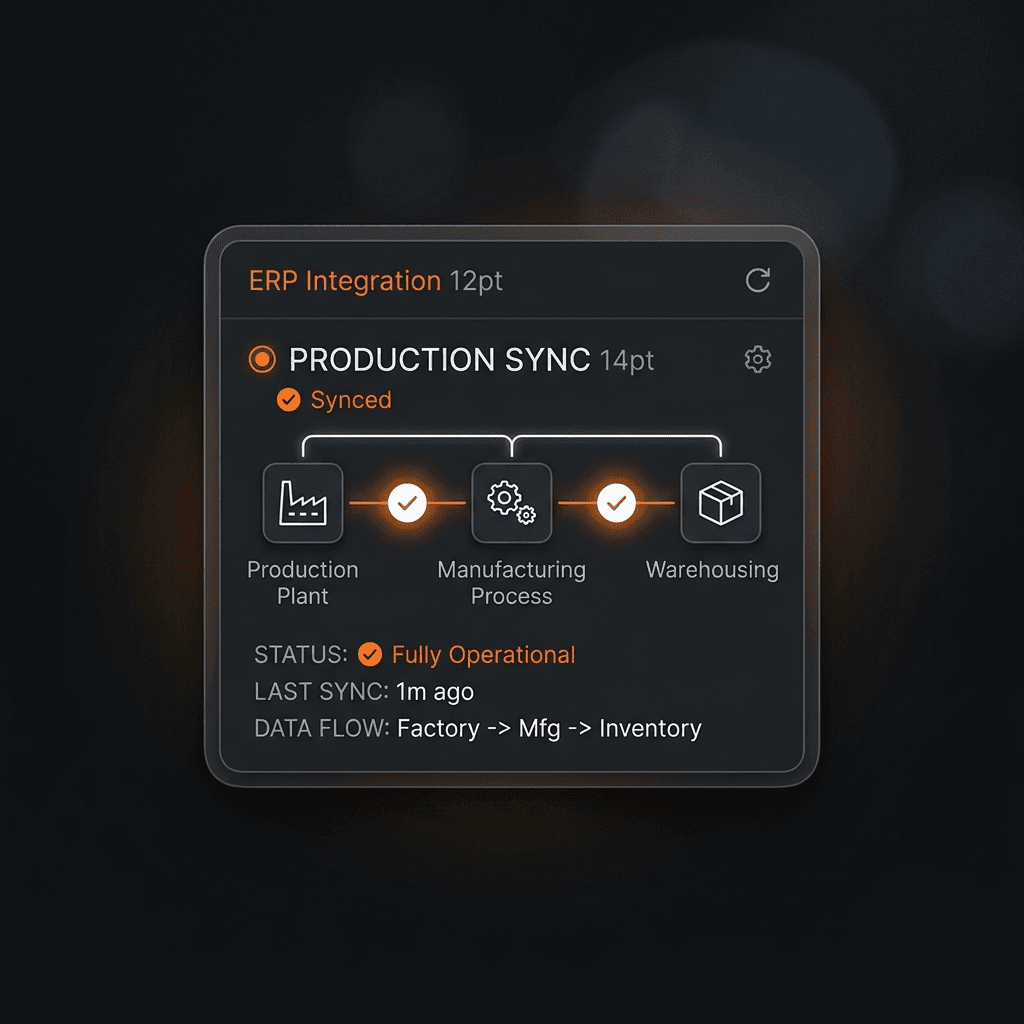
We integrate shop-floor execution data directly into the ERP, so material consumption updates inventory in near real time instead of at shift-end.
The result
Manufacturers with integrated ERP/MES systems coordinate meaningfully better with logistics and customer service than those without — 57% versus 26%, in industry survey data — which is what closing this exact gap tends to unlock.
Our approach.
Understand
Map your production systems, data sources and where visibility actually breaks down.
- Machine & IoT data audit
- ERP and shop-floor systems inventory
- Downtime and efficiency baseline
Architect
Design the data and integration layer that turns sensor noise into signal.
- IoT data pipeline architecture
- ERP integration design
- Digital twin / analytics model selection
Build
Deliver a system operations teams actually use, not a dashboard that gets ignored.
- Production deployment on the shop floor
- Alerting and anomaly detection built in
- Handover & operator training
Related capabilities.
Why us.
We lead with 20+ years of enterprise systems experience, a maintenance and procurement platform we've already built and run for factory floors, and the same technology transparency we bring to every engagement. If it needs to connect to your ERP, we'll tell you exactly how.
Related insights.
Let's build the connected system.
Start with a focused project discovery process.
Start a Project